

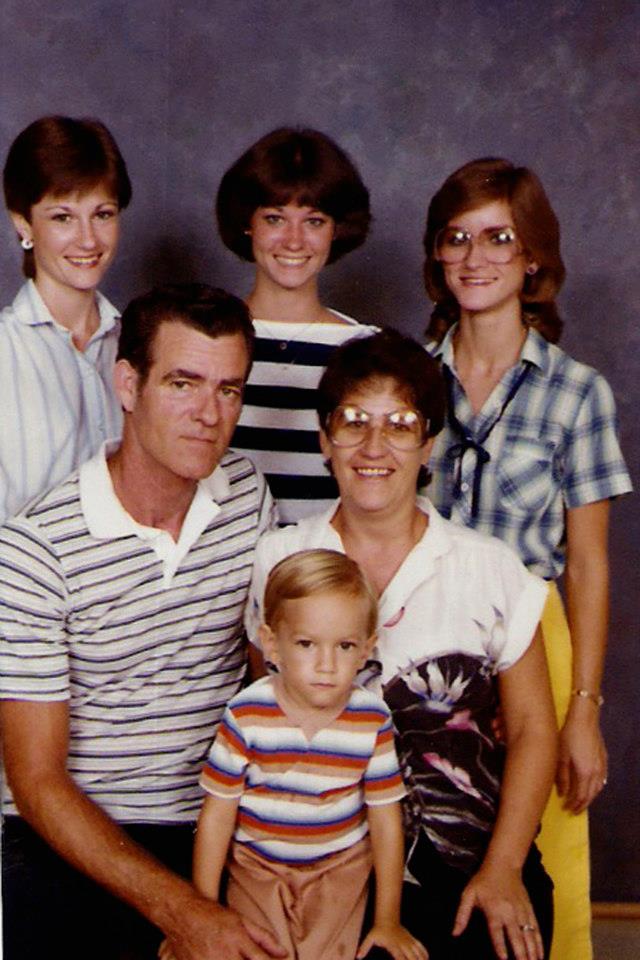
At nineteen years old, young people find themselves with their entire lives in front of them—high school in their rear view mirror and a world of opportunity on the horizon. Nineteen years old is the current age of my oldest daughter who is wrapping up her freshman year at college and preparing for a summer abroad in London. This is what should be, what ought to be, what we hope for our children.
But at nineteen, my mother would find herself in quite a different situation. Barely out of high school, unmarried, and just beginning to put her toe into the shallow end of the real world, she discovered she was pregnant. It was the late 1970s and Roe vs Wade was less than a decade old, making abortion services readily available and more socially acceptable than ever before. It would have been an easy solution to rectify some less than ideal circumstances, but abortion was never an option for my young mother. It was an unexpected pregnancy, but her child’s life would not be snuffed out, and I would not be unwanted, or unloved. I would be given a chance at life.
I often think about how hard that decision must have been. I once asked her if she ever considered terminating the pregnancy and without hesitation she said that she had not. I am thankful for her determination — for more reasons than one– but I must assume that the decision was more difficult than she let on. It is always difficult to do the hard right thing, when the easy wrong thing is so alluring and so… well… easy. But none the less, my mother and my biological father decided to get married and raise their new child together.
But as the reality of their new lives began to take hold, regret and fear, as they often do took over, and my biological father filed for divorce and left before I was born— a police officer serving divorce papers one night as my mother prepared dinner for her new family. We were both abandoned. Alone. Left. Unwanted. With few options, my mom moved home with her parents and prepared for the birth of her baby boy.
Mom had been raised a Navy brat. The eldest of three girls, she had moved all over the country wherever my Grandpa had been stationed. By the time he retired to southwest Kentucky, he had taken his family from Rhode Island to Virginia to Orlando and everywhere in between. To say that he was excited about having a grandson was an understatement. The ultimate girl-dad, he had never had a son of his own, and even with his own daughters, he had missed large portions of their childhoods due to his deployments. Now he would have a young man in his home to be his little buddy. The story is told that when my Grandpa discovered his daughter was going to give birth to a son, he was so excited he kissed her right on the mouth!
I may have been abandoned, but I was far from unwanted or unloved. Things seemed to be moving in the right direction. Mom began pursuing a nursing degree through the local community college, my aunts and grandmother stepped in to help take care of me, and all seemed right with the world.
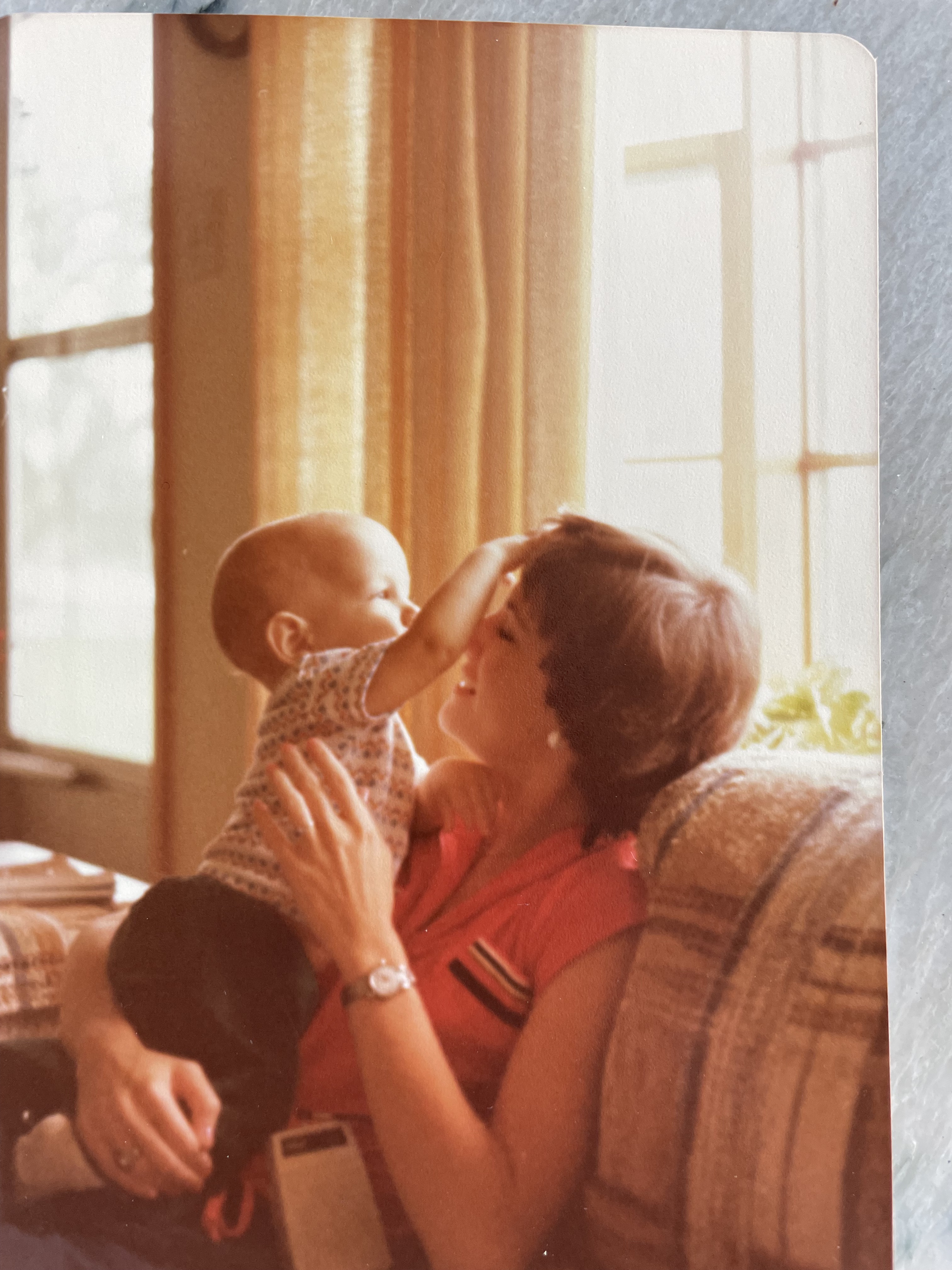
And then I got sick.
Shortly after my first birthday, just starting to run around on my own two feet, language just beginning to take hold in my toddler mind, I began to run strange fevers. My local pediatrician did his best to treat me but I was ultimately shipped off to Vanderbilt University Children’s Hospital. There my new mother and I would spend the better part of three months being poked and prodded as doctors and specialists turned over every rock trying to find the source of this strange infection. Eventually they found what they thought was a large abscess on my liver. Upon operation, however, it turned out that it wasn’t just one large infection, but a thousand absences covering the surface of the organ. The biopsies showed the infections to be a type of bacteria named Serratia, and with that diagnosis doctors began to piece together what was going on in my young body. Appropriate tests were done, and after months in the hospital I was diagnosed with Fatal Chronic Granulomatous. Disease– A genetic condition that rendered my immune system helpless against certain types of bacteria and fungal species. In 1978 little was known about this disease other than the fact that children suffering with this plight didn’t live long.
Doctors sat down with my young single mom and gave her the terrible news. Her new baby boy would have a life riddled with multiple infections, and likely would not live past the age of five.
Forty-plus years later, as a father of my own children, I cannot begin to imagine the grief that must have flooded my young mother’s heart, or the pain that crept over my grandparents and aunts as they peered into the harsh reality that had just been laid in front of them.
Not only that, but what was being seared into the consciousness of this little baby, laying in his mother’s lap in the Round Wing at Vanderbilt Hospital. At the time, I’m sure little thought was given to the mental well-being of this barely-able-to-communicate infant, but modern psychology lets us know that even at this young age the effects of trauma like this can have lasting effects on the mental state of an individual.
I was not even two years old, and I was unwanted and abandoned, sickly and broken, much more acquainted with hospital beds and needles than any child should. No one would have blamed my family for being angry with God. No one would have blamed them for walking away from the faith. No one would have blamed a young man growing up in this type of situation for never wanting to have anything to do with a God that afforded him such a fate.
And if we knew your story, no one would blame you either.
The world that we live in is broken because of sin. Disease, sickness, loss, unfairness, inequality and afflictions too many to name here affect us all. We find ourselves in less-than-ideal situations throughout our short and tormented lives. Sometimes our circumstances are a result of decisions made all on our own. Mistakes that went sideways and left us dealing with the consequences. Sometimes they are decisions that others made for us. A parent, coworker, boss, or would-be friend that had it out for you and left you holding the broken pieces of a dream after they abandoned ship. Sometimes bad things just happen because the universe is not as it is supposed to be. We live in a world broken because of sin, far from the Eden that God created so many years ago. If we are honest with ourselves, it really doesn’t matter why we find ourselves in the darkness, it’s just enough to know how bad it sucks. To feel abandoned. Abused. Forgotten. Unwanted. Unloved. Helpless. Hopeless.
The Bible tells us stories of men and women who found themselves in similar situations. The woman at the well in John chapter 4 was forced to fill her water jugs in the middle of the day to avoid the sneering eyes and tormenting words of those who wanted to tear her down for her choices. Naomi had been taken by her husband to a far away land where she found herself widowed and sonless, caring for two daughters-in-law in a world where she had little to no personal rights. Her thoughts would be recorded:
“The Lord has turned against me!” Ruth 1:13
Tweet
Job would find himself wondering what he had done to deserve the hand that had been dealt to him by the Accuser, and Jesus himself, as he hung on the cross cried out to God,
“Eli, Eli, lema sabachthani?” (which means “My God, my God, why have you forsaken me?”). Matthew 27:46
Tweet
But just because you feel abandoned by God, broken and rejected, it does not mean that God is not at work. We must not mistake our current circumstances as God’s rejection of us.
We must not mistake our current circumstances as God’s rejection
Tweet
You can have peace because He is always at work, and your story is far from over. The woman at the well was offered a fresh calling. She would be one of the (If not THE) first evangelists proclaiming Jesus as the Messiah (John 4:39); Naomi would find herself returning to Bethlehem just in time for the barley harvest (Ruth 1:22); Job would gain a much deeper appreciation of who God is (Job 38-41); and the grave could not hold the Son of God.
I don’t know the circumstances you find yourself in. I can’t imagine the hurt and trauma that you carry as you walk through life. I’m sure that if you were to tell your story, no one would blame you for wanting to walk away from it all, and curse the day that you were born.
But we must not mistake our current circumstances as God’s rejection. The last chapter in your story has yet to be written.
No one would argue that I had experienced a spectacularly tragic first 18 months of life, but my story, like yours, was far from over. As I was learning to take my first steps in this world, I had no way of knowing that God was placing me on a journey from abandonment to adoption.
 Jeremy Powell